
Toilet Backing Up in Largo: How to Tell a Local Clog From a Sewer Problem
One toilet overflowing can be a localized obstruction; water appearing in a tub when another fixture drains suggests a deeper branch or main restriction. If you are dealing with toilet backups in Largo, start by checking what changes when another fixture runs. This guide walks through safe observations, likely causes, and the point at which a licensed plumber should take over. Turbo Plumbing serves Largo and Tampa. A clear description of the symptom helps avoid a repair based on guesswork.
Quick answer: toilet backup Largo plumber
One toilet overflowing can be a localized obstruction; water appearing in a tub when another fixture drains suggests a deeper branch or main restriction. Stop flushing, turn off the toilet supply if the bowl rises, and check whether other fixtures are affected. Multiple affected fixtures, sewage at the lowest drain, or repeat backups justify a professional evaluation before more water is used. The right fix depends on where the fault actually starts, so compare the affected fixture with the rest of the system before choosing a part or service.
Largo toilet backup plumbing: at a glance
What to check | Why it matters |
|---|---|
First observation | Stop flushing, turn off the toilet supply if the bowl rises, and check whether other fixtures are affected. |
Safe first step | Use a flange plunger for a simple isolated clog without forcing objects deeper into the drain. |
Call a plumber | Multiple affected fixtures, sewage at the lowest drain, or repeat backups justify a professional evaluation before more water is used. |
Toilet plumbing: stop flushing and contain the overflow
When a toilet rises toward the rim, stop flushing. Turn the small supply valve behind it clockwise if safe and place towels to contain clean water, but treat sewage as contaminated. One flush can turn a contained clog into floor damage. Keep children and pets away from wastewater and avoid running nearby fixtures until you understand whether the blockage is shared.
Try a flange plunger on an isolated clog
A single toilet that will not drain while other fixtures work normally often has an obstruction in its trap or nearby branch. A flange plunger can create a seal in the bowl. Use steady strokes and watch the water level. If the toilet suddenly drains, test with one cautious flush. If the level rises again, stop rather than repeating the cycle.
When an object is stuck
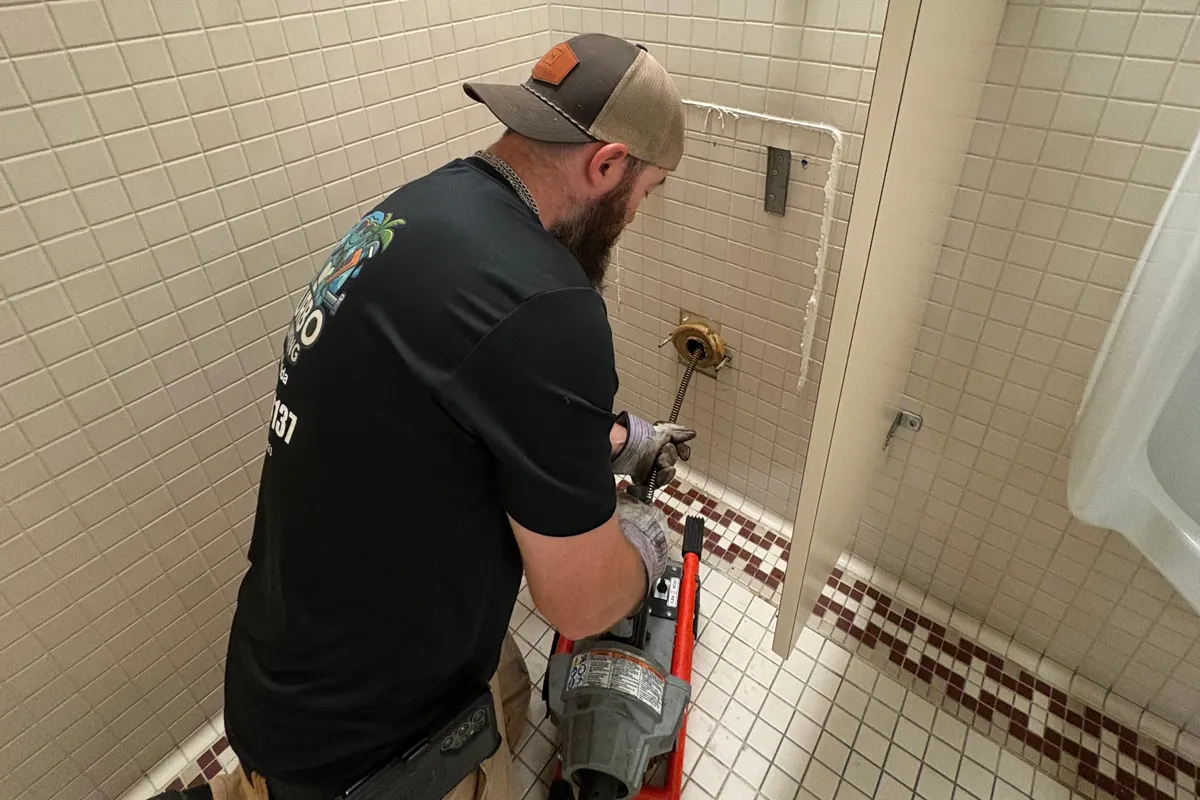
An object such as a toy or hygiene product can lodge in the toilet and resist a plunger. Forcing it farther may complicate removal. Tell the plumber what might have entered, even if it feels embarrassing. A closet auger designed for toilets may retrieve or clear some obstructions without damaging porcelain, but technique and object type matter.
Why the shower fills when a toilet flushes
Water appearing in the tub or shower when the toilet flushes points farther downstream because several fixtures share part of the drain. If a low fixture receives wastewater after laundry runs, consider a branch or main-line restriction. Stop using the connected fixtures and note which action triggers the backup. That pattern can help locate the affected section.
Recurring backups need diagnosis
Recurrent backups deserve more than repeated plunging. A plumber may inspect a cleanout, clear the blockage with appropriate equipment, and use a camera when the line is visible. The camera can show an offset, root entry, broken pipe, or another condition, but a single backup does not prove any one of these. Ask for the location and evidence.
Check for a shared building line
Check whether the backup is limited to your property. In a multiunit building, a shared line may affect neighbors and require coordination with management. A private sewer line and a public main have different responsibilities. Report multiple affected units or exterior overflow promptly so the right party can be involved without unnecessary interior work.
Water at the toilet base is different
If the toilet leaks only at the base during a flush, the issue may involve the seal or flange rather than a blocked main line. A loose toilet can damage the seal over time. Do not assume all water around a toilet is sewage backing up through the bowl. Dry the floor carefully, observe the next use only if safe, and describe where water emerges.
Test every affected fixture after repair
After clearing a line, test all previously affected fixtures in a controlled sequence. Ask what was removed and whether the technician saw damage that could cause recurrence. Save the camera findings or written notes for future repairs. A clear line today and a structurally sound line are different conclusions; the evidence should support whichever one is offered.
Keep wipes out of the toilet
Keep wipes, paper towels, and hygiene products out of the toilet even when their packaging suggests otherwise. Flush only human waste and toilet paper. That habit reduces avoidable obstructions but cannot fix a damaged sewer pipe. If backups recur despite careful use, prioritize diagnosis over another temporary clearing.
Call for Largo sewer service
Turbo Plumbing serves Largo and Tampa for sewer and drain work. When you call, identify all affected fixtures, whether sewage has entered the home, and whether the supply is shut off. Those details help the team prioritize containment, choose access, and explain whether the problem is a local toilet clog or a larger line issue.
A plumbing detail that changes the diagnosis
A toilet plunger has a projecting flange that fits the bowl outlet; a flat sink plunger often cannot make the same seal. Keep enough water in the bowl to cover the rubber, but do not add water if it is already near the rim. A few controlled strokes are enough to reveal whether the clog yields. If the bowl drops but immediately fills again, stop. A partial opening may allow one flush while leaving the obstruction in place. A technician can assess whether an auger, drain access, or wider line inspection is appropriate without repeated overflow tests.
Questions to ask your plumber before work begins
Ask what was tested, where the fault is located, and which observations support the recommendation. Compare the repair scope with a replacement option only when the condition of the toilet backups makes that choice relevant. Request the expected shutoff time, any access or finish work, and the test that will confirm normal operation. The explanation should connect to the symptoms you reported in Largo, not a standard package applied to every home.
Keep a useful plumbing repair record
Photograph visible toilet backups symptoms only when safe. Note the first date, affected fixtures, and whether the problem occurs continuously or under specific conditions. Keep the written diagnosis and parts or model information after service. If the issue returns, those records allow the next technician to compare the same condition rather than restart from a vague description. A clear before-and-after test is the best way to tell whether the work solved the original complaint.
Frequently asked plumbing questions
Can I keep using the affected fixture?
Multiple affected fixtures, sewage at the lowest drain, or repeat backups justify a professional evaluation before more water is used. Stop using it if water escapes, wastewater backs up, or a safety hazard is present.
Will the whole system need replacement?
No decision follows from the symptom alone. Ask a plumber to show the failed part or damaged section and explain a durable repair before comparing larger work.
Does Turbo Plumbing serve Largo?
Yes. Largo appears on the company service areas page. Provide your ZIP code to confirm appointment availability.
Explore Turbo Plumbing’s sewer video inspections for service details and options relevant to this issue.
Request sewer line repairs in Largo
For help with toilet backups, call Turbo Plumbing at (813) 404-8137 or request service online. Describe the affected fixture, recent changes, and any active water damage. Fast, friendly, and fully licensed service starts with an accurate diagnosis. The team serves Tampa and Largo, with scheduling based on your address and the nature of the issue.
Explore Sewer Line Repairs | Plumbing in Largo | Request service
Need Plumbing Help in Tampa Bay?
Fast, friendly, and fully licensed. Turbo Plumbing is just a call or click away.